Why I believe trusted commercial data is becoming more valuable—not less—in the age of AI.

Every conference I attend, every customer conversation I have, and just about every discussion on LinkedIn eventually lands on the same question: “Will AI replace commercial data providers?” My answer usually surprises people. I think we’re asking the wrong question.
The better question is this: “Can AI be trusted without them?”
After spending nearly twenty years building products in data quality, enrichment, and customer data management, I’ve become convinced that AI doesn’t have a data problem. It has a trust problem.
Business data is never finished
A few years ago, I worked with an organization that decided it was finally going to fix its customer data. They had nearly two million customer and prospect records spread across multiple systems and invested heavily in manual cleansing. Six months later they finished, only to realize that many of the records cleaned during the first month had already changed.
Contacts had changed jobs.
Companies had moved.
Businesses had been acquired.
That experience fundamentally changed how I think about customer data. Business data isn’t static. It’s alive. You don’t solve data quality. You manage it.
The organization eventually shifted to a different model. AI accelerated research and validation. Commercial reference data supplied trusted, continuously maintained information at scale. Humans focused on governance and exception management. The result wasn’t perfect data, but it dramatically reduced time to value. Progress over perfection became the winning strategy.
Trust is the product
People assume AI can simply ‘go find the data.’ Sometimes it can. Ask an AI agent for a headquarters address or website and it will often succeed. Now ask it to find my direct business email, tell you whether I changed jobs three weeks ago, identify buying intent, or map a corporate hierarchy. The conversation changes immediately because much of that information isn’t publicly available. It has to be collected, validated, linked, normalized, and continuously refreshed.
That’s what companies like ZoomInfo, Dun & Bradstreet, Apollo.io, and others have spent years building. Their real product isn’t data. Their real product is trust. Data is simply the delivery mechanism. No commercial data provider is perfect. Every provider has strengths, blind spots, and areas where its coverage is stronger than others.
I believe AI will create pricing pressure across enrichment. Basic capabilities such as company descriptions, website discovery, and address validation are becoming commodities. But intent data, technographics, identity resolution, corporate hierarchies, ownership structures, and reference data remain extraordinarily difficult to recreate.
AI doesn’t create trust. It consumes trust.
Garbage in, garbage out still applies.
Software is becoming a commodity
The same principle applies to commercial data vendors. Many still believe their competitive advantage is their software. I disagree. As tools like Claude Code and OpenAI Codex reduce the cost of building applications, software becomes easier to replicate. Applications will increasingly become commodities. Trusted proprietary data becomes the durable competitive advantage.
No commercial data provider is perfect. Every provider has strengths, blind spots, and areas where its coverage is stronger than others.
The future of customer data management
Organizations aren’t buying a one-time data quality project. They’re beginning a long-term data management program. Customer data must be continuously monitored, governed, enriched, measured, and improved. Increasingly, organizations will rely on multiple commercial data providers because no single vendor is best at everything.
One thing that has surprised me while building AI-enabled digital assistants is how difficult it remains to produce consistently accurate results, even with excellent prompts and guardrails. The lesson wasn’t that AI doesn’t work. The lesson was that trusted inputs matter more than ever. AI amplifies whatever foundation you give it.
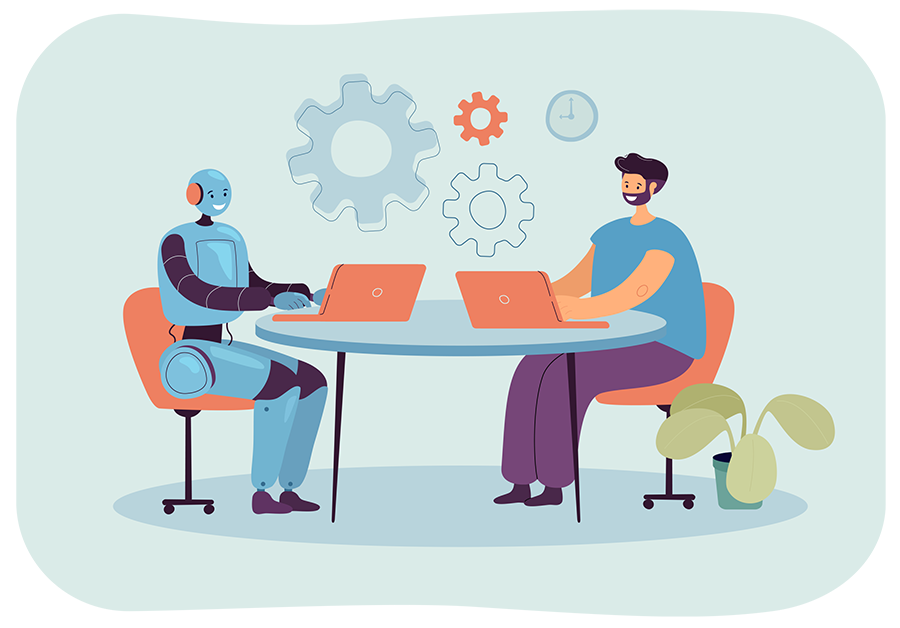
I’ve started thinking about modern customer data management as a three-layer architecture: AI discovers. Trusted commercial data creates trust. Humans govern. Together these layers produce outcomes that none can achieve independently.
Five years from now I don’t think we’ll think about enrichment as another CRM plug-in or nightly batch process. Trusted customer data becomes enterprise infrastructure—embedded into every AI agent, every Revenue Operations workflow, every CRM, and every customer interaction.
Because in the AI era, data isn’t the competitive advantage. Trusted data is.