DataGroomr Recognized for Leading the Charge on Agentic Transformation within Salesforce Ecosystem.

DataGroomr Recognized for Leading the Charge on Agentic Transformation within Salesforce Ecosystem.
Without accurate, up-to-date information, teams are making decisions based on an inaccurate image of their customers and pipeline.
From sales to marketing and customer service, artificial intelligence is reshaping how organizations use Salesforce.
Imagine a new way of working… What if you could simply ask DataGroomr to help you find what you need, understand your data, and take action? And what if you could catch potential Salesforce import problems before they happen? This release delivers both.
In the article I cover four of my favorite ways DataGroomr and AI work hand-in-hand to save you time and get cleaning your data right away!
Validate campaign members directly from the Campaign page and send only to verified email addresses.
The new capabilities make customer data verification smarter and more efficient, helping organizations build trusted customer data across Salesforce.
One of our biggest releases of the year delivers powerful enhancements to rules, enrichment, AI, and overall usability.
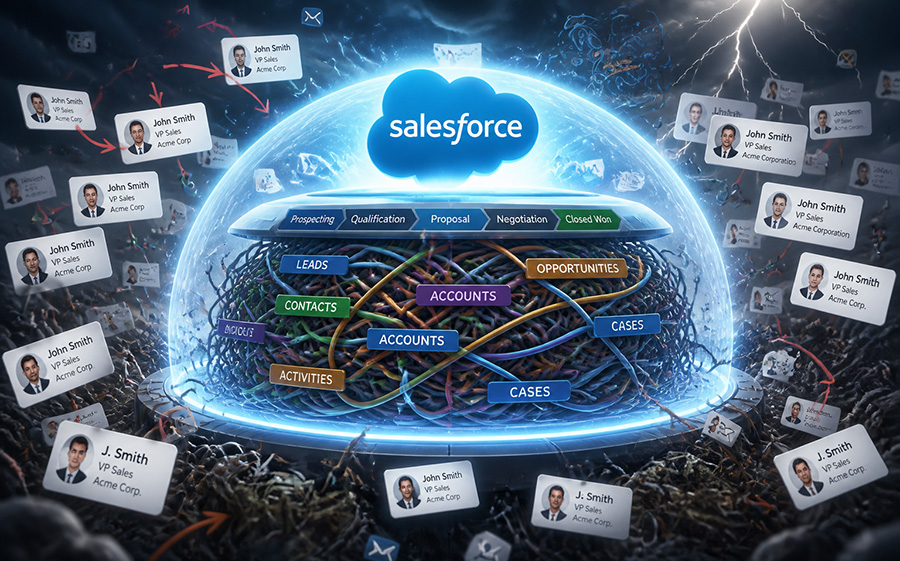
The true nature of duplicates is that they span across objects. These cross-object duplicates are harder to detect, are harder to merge, and can be very disruptive to future processes.
New capabilities provide a centralized view of CRM health, helping organizations measure, prioritize, and improve Salesforce data quality.
New capabilities provide a centralized view of CRM health, helping organizations measure, prioritize, and improve Salesforce data quality.
Dirty data isn’t just a maintenance problem, it’s a data collection problem. Learn how form design, validation, and Salesforce connectors stop dirty data at the source.
Before questioning your AI strategy, it’s worth taking a closer look at the data foundation supporting it. Often, the biggest obstacle to successful AI outcomes isn’t the model; it’s the quality of the Salesforce data behind it.
While the previous release introduced enrichment orchestration as an AI-powered workflow, the July release focuses on the health of your Salesforce data, enables real-time matching across related objects, and makes trigger execution predictable.
Duplicate accounts, contacts, leads and opportunities are not just operationally inefficient, but they also are a direct cause of AI hallucinations.
DataGroomr customers can now orchestrate GenAI and third-party enrichment providers through agentic workflows while maintaining clean, trusted Salesforce data.
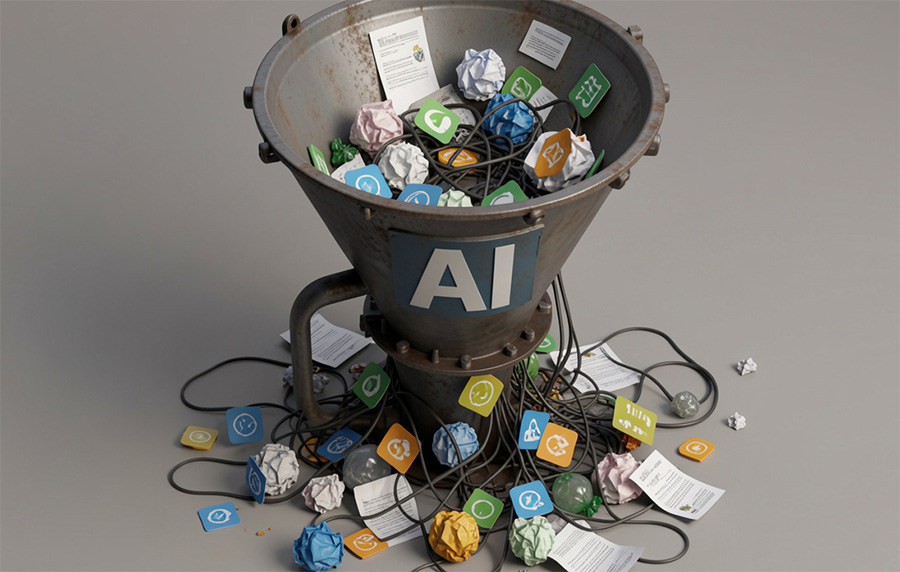
AI systems cannot deliver reliable outputs when fed duplicate entries, incomplete customer histories, outdated data and inconsistent fields.
The May’26 release is one of the most substantial updates to DataGroomr in a long time. It expands the platform from a deduplication and cleansing tool into a full AI-powered data quality and enrichment workspace.
I tested four top Salesforce deduplication tools (DataGroomr, Plauti’s Duplicate Check, DemandTools by Validity and Cloudingo) to uncover their strengths and quirks.
Enriching data is not merely about filling gaps but doing so in a way that preserves the dataset’s structure, maintains relationships between variables, and accounts for uncertainty.





© 2026 DataGroomr, LLC. All Rights Reserved.