Organizations that trust their data don’t just periodically clean it; they continuously manage it.

Early in my career, I worked with a large retail pharmacy operating more than 8,200 locations. My team helped build a master data management and data quality solution designed to cleanse, deduplicate, master, and relate enormous volumes of information about patients, prescribers, and locations.
It was one of the first times I truly understood that data quality could have consequences far beyond whether a dashboard was accurate or a marketing campaign reached the right person.
We were working with patient information connected to prescription activity, where accurate patient identification was critical. Patients might have an allergy to certain medications, for example. A duplicate or incorrectly matched patient could potentially mean that important information wasn’t associated with the record being reviewed when a prescription was filled. In that environment, data quality wasn’t just an IT problem. It could become a patient safety issue, with potentially serious consequences.
What impressed me most about that organization, however, wasn’t the technology we implemented. It was what they built around it.
They understood that implementing master data management didn’t mean the work was finished. They established stewardship teams responsible for ensuring governance policies were reflected in the way data was managed. They appointed data governance leadership to maintain those policies and adapt them as new data sources and business requirements emerged. Responsibility for different data domains was assigned to leaders with the expertise to understand what the information meant and how the business used it.
They also measured what was happening. Dashboards continuously monitor data quality. Issues were prioritized based on criticality and business impact. Problems were remediated as they appeared rather than waiting for the next major cleanup effort. Periodic reviews examined the broader environment to understand where quality was deteriorating, where new sources were creating problems, and where enrichment or additional controls were required.
They didn’t treat data quality as a project. They treated it as an operating discipline.
That distinction has stayed with me throughout my career because I’ve watched organizations make the opposite mistake over and over again. A company discovers that its CRM has duplicate, incomplete records, outdated contacts, or unreliable account information. A project is funded. The data gets cleaned. Everyone celebrates. Then the organization moves on. Six months later, the same problems began appearing again.
The reason is simple. The data didn’t fail. The world represented by the data changed.
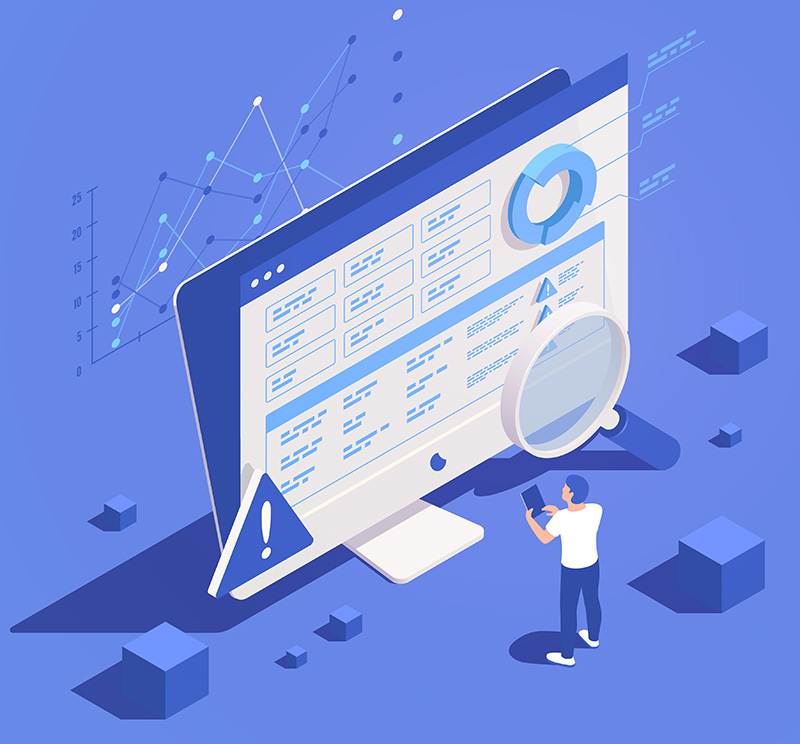
People leave companies, get promoted, change roles, and take on new responsibilities. Companies merge, relocate, launch products, enter markets, and sometimes disappear entirely. Buying priorities change. New executives arrive. Champions move to competitors or prospective customers. Intent appears and disappears. A customer record that was completely accurate yesterday can become incomplete tomorrow without anyone ever touching it.
That’s why I don’t believe organizations ever really “finish” data quality. They manage it.
This is particularly important in sales and marketing, where timeliness can be just as important as accuracy. An outdated email address means a salesperson never reaches the prospect. A champion who moves to another company can represent a new sales opportunity while simultaneously creating retention risk at the account they left behind. Changes in buying intent can tell a sales team that an account deserves attention today rather than six months from now. If those changes aren’t detected and acted upon quickly, the data may still look perfectly “clean” in the CRM while the business opportunity has already moved somewhere else.
This also changes how I think about data ownership. Data quality can’t simply belong to IT. The business understands what the data means and how it affects the decisions being made. In my experience, the most effective model is distributed ownership with clear accountability. A specific business or data leader should be responsible for each important domain, supported by stakeholders who use that information and by centralized data teams that provide governance, stewardship, technology, and standards. Shared ownership shouldn’t mean nobody owns it.
AI will make this operating model significantly more powerful, but I don’t believe it eliminates any of these fundamentals. AI can identify potential data quality issues, detect anomalies, infer missing attributes, propose remediation, select tools or reference sources to fill gaps, evaluate potential matches, and judge whether the resulting data meets an expected level of confidence. Agentic workflows can increasingly orchestrate these activities from beginning to end, bringing the resulting information directly into downstream business processes.
Imagine a lead entering a CRM with incomplete information. An AI-enabled workflow could identify what’s missing, select the appropriate enrichment source, evaluate possible matches, determine the most likely account, apply routing rules, and send the lead to the appropriate salesperson. If that lead sits untouched in a queue, another agent could recognize the delay, evaluate the context, and recommend or execute the next best action. That’s fundamentally different from running a data cleanup every six months.
But autonomy also introduces risks. External and reference data still matter when an organization’s own information isn’t enough to build a complete or accurate customer or prospect profile. Traditional data quality technology still has an important role in deterministic matching, validation, monitoring, and governance. And humans remain critical when ambiguity, edge cases, or the consequences of an incorrect decision make complete automation inappropriate.
The higher the consequence of getting the data wrong, the more important testing, observability, guardrails, and human oversight become. I learned that lesson years ago working with patient information, and I believe it becomes even more important as AI begins making decisions based on the data organizations manage.
The biggest mistake companies make with data quality is still believing it’s something they can complete. Clean the CRM this quarter. Enrich the database twice a year. Fix the duplicates when the reports start looking wrong. That’s not data management. That’s remediation.
A mature data quality program continuously monitors the information the business depends on, identifies meaningful change, evaluates accuracy and timeliness, remediates problems based on business impact, and puts those changes to work in the business. The goal isn’t perfect data. The goal is trusted data that remains sufficiently accurate, current, complete, and contextual for the decisions the business needs to make.
In the AI era, I believe that distinction will become increasingly important. AI will allow organizations to monitor, evaluate, enrich, and remediate information at a scale that wasn’t practical before. But it won’t change the fundamental responsibility organizations have to continuously manage the information their businesses depend upon.
Trusted data doesn’t stay trusted by itself. And that’s why data quality was never really a project. It’s an operating discipline.